You’ve done the hard part. Two companies want you. Now comes the bit most people mess up.
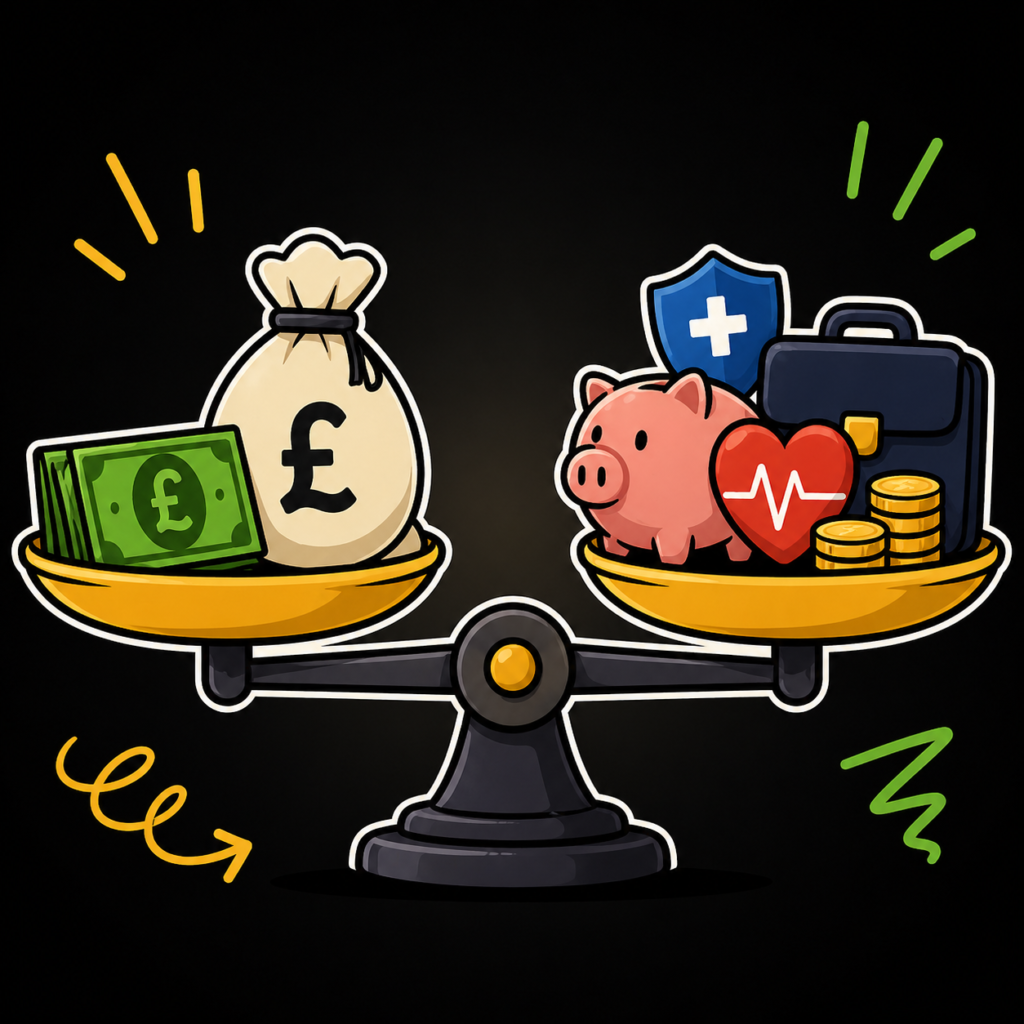
Which offer is actually better?
Most people look at the salary, pick the bigger number, and call it a day. That’s a mistake. In a lot of cases, the “lower” salary offer is actually worth more money once you break it down properly.
Why salary is a terrible way to compare offers
Your salary is just the headline number. Before tax. Before National Insurance. Before pension. Before student loan.
Basically… before reality kicks in.
A £60,000 salary vs £55,000 looks like a £5,000 difference.
After tax and NI?
👉 It’s closer to £2,800
Still something—but nowhere near what it looked like on paper. And once you factor in everything else, that gap can disappear completely… or even reverse.
What actually matters: total compensation
Instead of just salary, you need to look at everything the employer is putting on the table.
That includes:
- Base salary — the headline number (what everyone obsesses over)
- Bonus — 10%, 20%, sometimes much more
- Employer pension — free money that never hits your payslip but is still yours
- Benefits — medical, loans, perks (with some tax attached)
- Salary sacrifice options — this is where things get really interesting for higher earners
Most people ignore half of this.
A quick example (this is where it flips)
Let’s say you’ve got two offers:
Offer A
- £65,000 salary
- No bonus
- 3% pension
- No benefits
Offer B
- £60,000 salary
- 15% bonus (£9,000)
- 8% pension (£4,800)
- Private medical (£1,500 value)
On paper, Offer A “wins”.
But in reality:
- Offer A total = £66,950
- Offer B total = £75,300
👉 Offer B is over £8,000 better
Same job decision. Completely different outcome.
The tax trap (this catches a lot of people)
Here’s where it gets even worse.
A higher salary = more tax.
If your pay pushes you into the 40% band, you’re losing:
- 40% income tax
- 2% NI
So that “extra” £5k?
👉 You might only see £2.5k of it
And around £100k, it gets brutal.
Between £100,000 and £125,140:
👉 You’re effectively taxed at 60%
So yes..
It’s entirely possible for a “higher salary” to leave you with less money in your pocket.
What you should actually ask before saying yes
Before you accept anything, ask:
- What’s the employer pension %?
- Is there a bonus, and what’s realistic (not just “target”)?
- Any benefits I should know about?
- Can I salary sacrifice into pension?
- Does this push me into a worse tax band?
This takes 5 minutes and can be worth thousands a year.
Do the one thing most people don’t
Actually compare the offers properly.
Use the Compare tab on the Know Your Pay calculator.
Plug in:
- Salary
- Bonus
- Pension (yours + employer)
- Benefits
You’ll instantly see:
- Net pay
- Monthly take home
- Bonus month impact
- Total compensation
👉 And which offer actually wins
The bottom line
Stop comparing job offers based on salary. It’s the least useful number in the entire package.
What matters is:
- Total compensation
- What actually lands in your bank each month
And more often than you’d think…
👉 The “lower salary” offer comes out on top